History
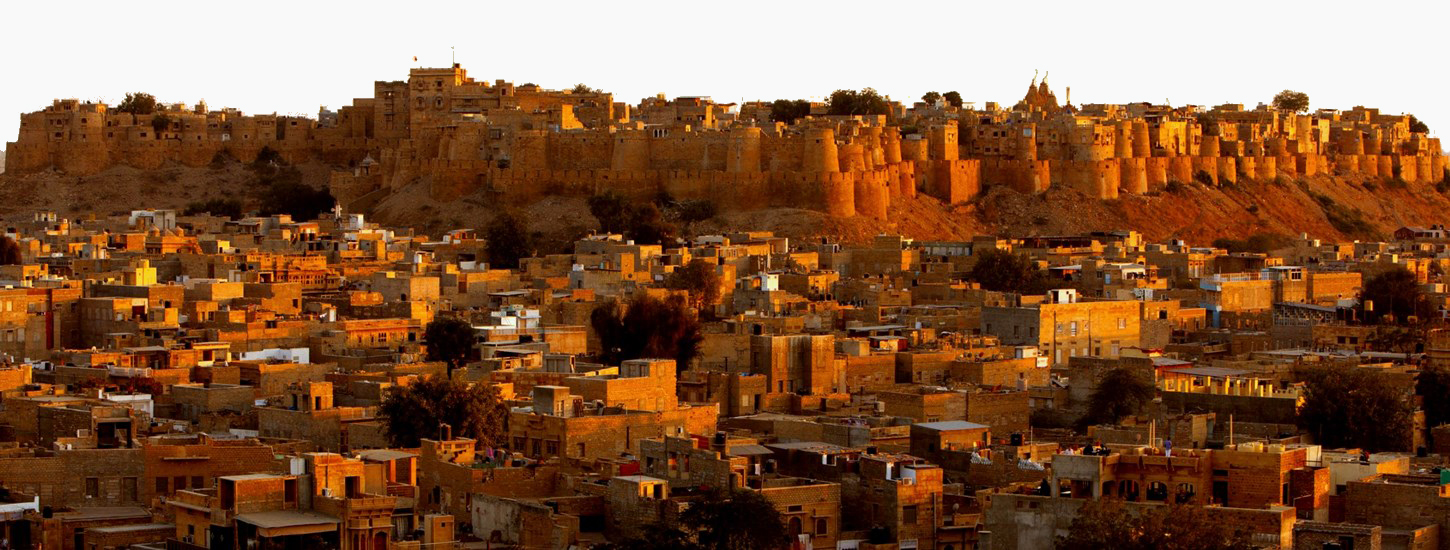
The History of Jaisalmer has a charm of its own. Like all other cities of Rajasthan, Jaisalmer too has its own glorious past to boast about. History of Jaisalmer draws heavily from the history of the Rajputana. The city is said to be founded by Raja Rawal Jaisal, a Bhatti Rajput ruler, in approximately 1156 A D. Legends go by that he did it on the behest of a local hermit named Eesaal. The raja chose Trikut hill as the new site for his fort. This was because he thought that his previous abode at Luderwa (16 km from present Jaisalmer) was vulnerable to possible enemy assault.
In medieval times, Jaisalmer continued to be on the focus of the masses because of its location. It falls on the way of one of the two routes, which connected India wth Persia, Egypt, Africa and the west.
History of
Jaisalmer Fort
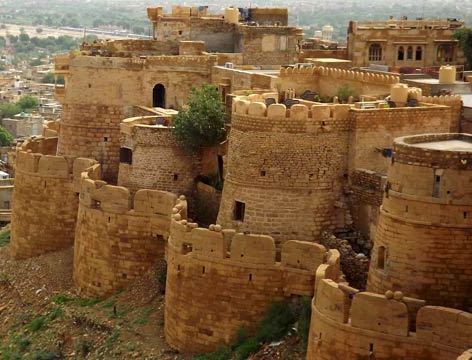
The fort was built by Rawal Jaiswal in 1156 AD. The fort contains 3 layers of walls. The outer or the lower layer is made out of solid stone blocks and it reinforces the loose rubble of Trikuta Hill. The second, or middle, wall snakes around the fort. These defences of the fort include 99 bastions, of which 92 were built between the period of 1633 – 47.
Ala-ud-din Khilji attacked and captured the fort in the 13th century and managed to hold it for 9 years. During the siege of the fort the Rajput women committed Jauhar. The second battle at the fort happened in 1541, when Mughal emperor Humayun attacked the fort city.
The fort was under the control of Mughals until 1762 when Maharawal Mulraj took control of the fort. Due to its isolated location, the fort escaped the ravages of the Marathas.
manganiyars
of Thar
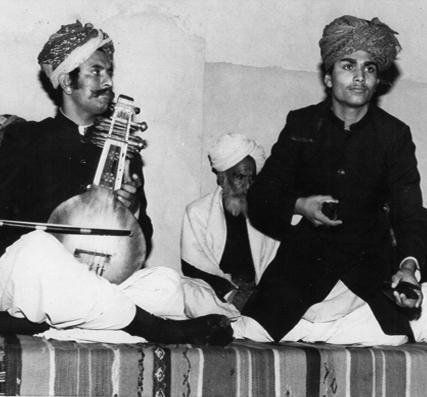
The manganiyars are traditional minstrels of Thar Desert. Since ages they have been singing and performing for their Rajput patrons. At times of a wedding or child birth in the house of their patrons, the manganiyars appear to sing auspicious songs. In return they receive gifts and money. Their traditional instruments are Dholak and Khartal which are percussion instruments and Khamaicha – a string instrument to be played with a bow. It is like Sarangi which is played by Sindhis and Langas. But Khamaicha has a distinct sound reminding one of camel’s strides in the desert.
For centuries they were safeguarding and enriching their traditional musical heritage from generation to generation. It was late Sh. Komal Kothari who discovered the richness of their art form and brought them from the obscurity of centuries to the lime light of the world. Komal Kothari’s legendry efforts led to the recognition of unique Rajasthani style of music throughout the world.